 WikiTrade
The Myth of Sisyphus
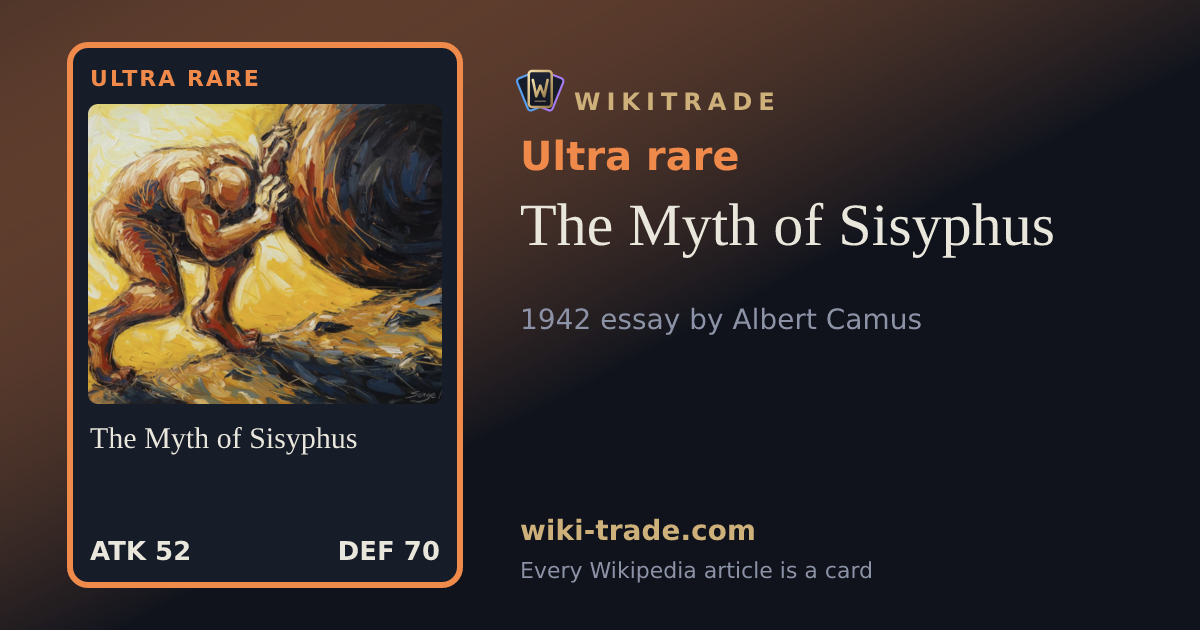
The Myth of Sisyphus is a 1942 philosophical work by Albert Camus. Influenced by philosophers such as Søren Kierkegaard, Arthur Schopenhauer, and Friedrich Nietzsche, Camus introduces his philosophy of the absurd. The absurd lies in the juxtaposition between the fundamental human need to attribute meaning to life and the "unreasonable silence" of the universe in response. Camus claims that the realization of the absurd does not justify suicide, and instead requires "revolt". He then outlines several approaches to the absurd life. In the final chapter, Camus compares the absurdity of man's life with the situation of Sisyphus, a figure of Greek mythology who was condemned to repeat forever the same meaningless task of pushing a boulder up a mountain, only to see it roll down again just as it nears the top. The essay concludes, "The struggle itself towards the heights is enough to fill a man's heart. One must imagine Sisyphus happy."
On WikiTrade, every Wikipedia article is a card: the more the article is read, the rarer the card. Open free packs, complete your album, trade, bid and challenge others to general-knowledge duels.
Play for freeRead the article on WikipediaText from Wikipedia (CC BY-SA 4.0). WikiTrade is an independent site, not affiliated with Wikipedia or the Wikimedia Foundation.