 WikiTrade
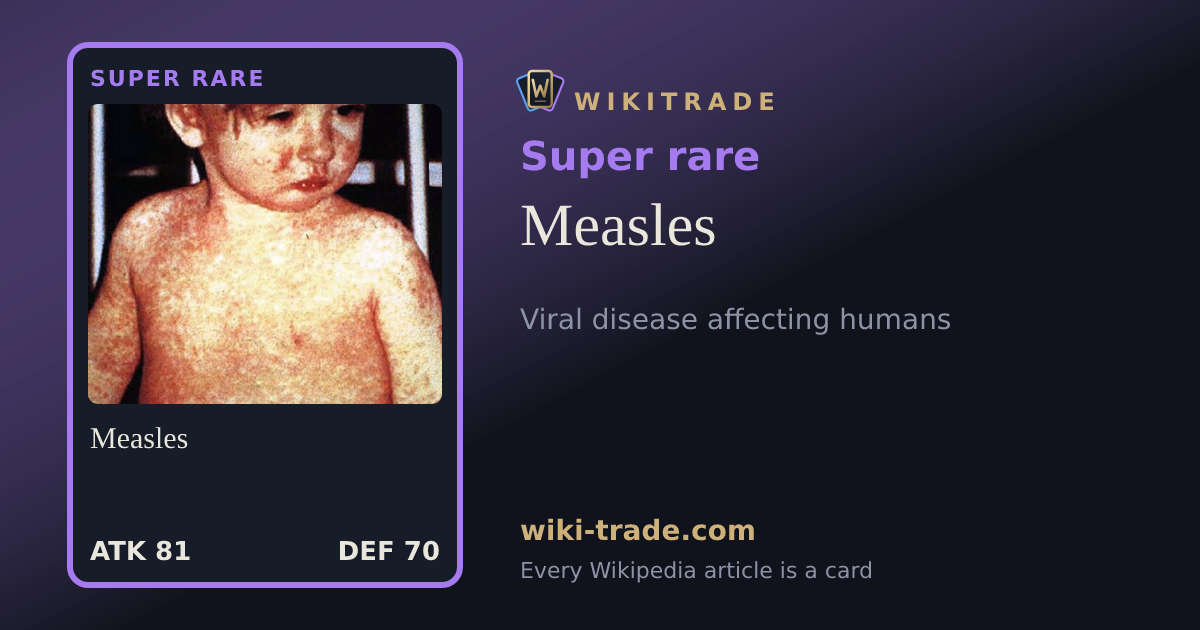
Measles
Measles is a highly contagious, vaccine-preventable infectious disease caused by the measles virus. Other names include morbilli, rubeola, 9-day measles, red measles, and English measles. Symptoms usually develop 10–12 days after exposure to an infected person and last 7–10 days. Initial symptoms typically include fever, often greater than 40 °C (104 °F), cough, runny nose, and inflamed eyes. Small white spots known as Koplik spots may form inside the mouth two or three days after the start of symptoms, followed by a rash which usually starts on the face and then spreads to the rest of the body. Common complications include diarrhea, middle ear infection (7%), and pneumonia (6%). These occur in part due to measles-induced immunosuppression. Less commonly, seizures, blindness, or inflammation of the brain may occur.
On WikiTrade, every Wikipedia article is a card: the more the article is read, the rarer the card. Open free packs, complete your album, trade, bid and challenge others to general-knowledge duels.
Play for freeRead the article on WikipediaText from Wikipedia (CC BY-SA 4.0). WikiTrade is an independent site, not affiliated with Wikipedia or the Wikimedia Foundation.