 WikiTrade
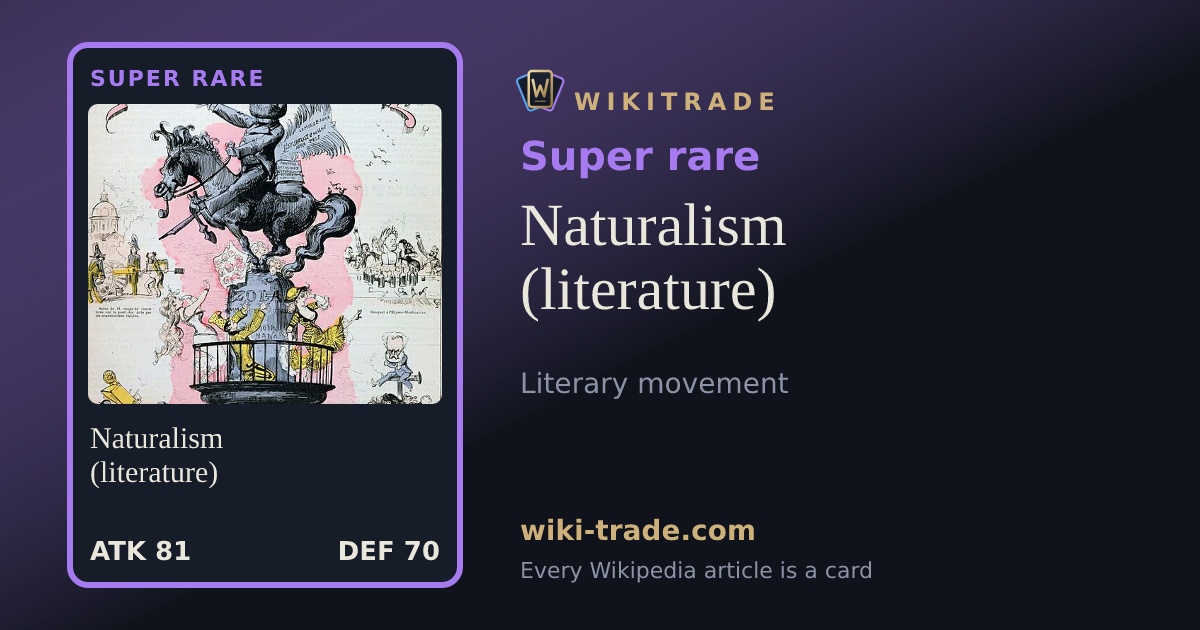
Naturalism (literature)
Naturalism is a literary movement beginning in the late nineteenth century, similar to literary realism in its rejection of Romanticism, but distinct in its embrace of determinism, detachment, scientific objectivism, and social commentary. Literary naturalism emphasizes observation and the scientific method in the fictional portrayal of reality. Naturalism includes detachment, in which the narrator maintains an impersonal tone and disinterested point of view; determinism, which is defined as the opposite of free will, in which a character's fate has been decided, even predetermined, by impersonal forces of nature beyond human control; and a sense that the universe itself is indifferent to human life. The novel would be an experiment where the author could discover and analyze the forces, or scientific laws, that influenced behavior, and these included emotion, heredity, and environment. The movement largely traces to the theories of French author Émile Zola.
On WikiTrade, every Wikipedia article is a card: the more the article is read, the rarer the card. Open free packs, complete your album, trade, bid and challenge others to general-knowledge duels.
Play for freeRead the article on WikipediaText from Wikipedia (CC BY-SA 4.0). WikiTrade is an independent site, not affiliated with Wikipedia or the Wikimedia Foundation.