 WikiTrade
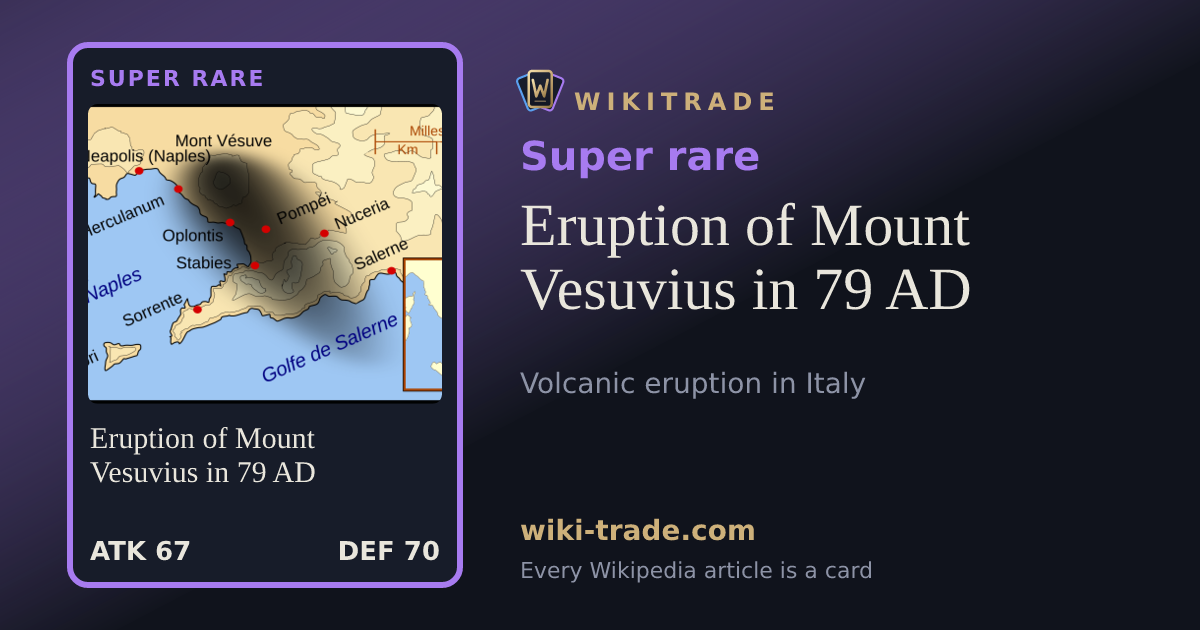
Eruption of Mount Vesuvius in 79 AD
In 79 AD, Mount Vesuvius, a stratovolcano located in the modern-day region of Campania, Italy, erupted, causing one of the deadliest eruptions in history. Vesuvius violently ejected a cloud of super-heated tephra and gases to a height of 33 km (21 mi), ejecting molten rock, pulverized pumice and hot ash at 1.5 million tons per second, ultimately releasing 100,000 times the thermal energy of the atomic bombings of Hiroshima and Nagasaki. The event gives its name to the Vesuvian type of volcanic eruption, characterised by columns of hot gases and ash reaching the stratosphere, although the event also included pyroclastic flows associated with Peléan eruptions.
On WikiTrade, every Wikipedia article is a card: the more the article is read, the rarer the card. Open free packs, complete your album, trade, bid and challenge others to general-knowledge duels.
Play for freeRead the article on WikipediaText from Wikipedia (CC BY-SA 4.0). WikiTrade is an independent site, not affiliated with Wikipedia or the Wikimedia Foundation.