 WikiTrade
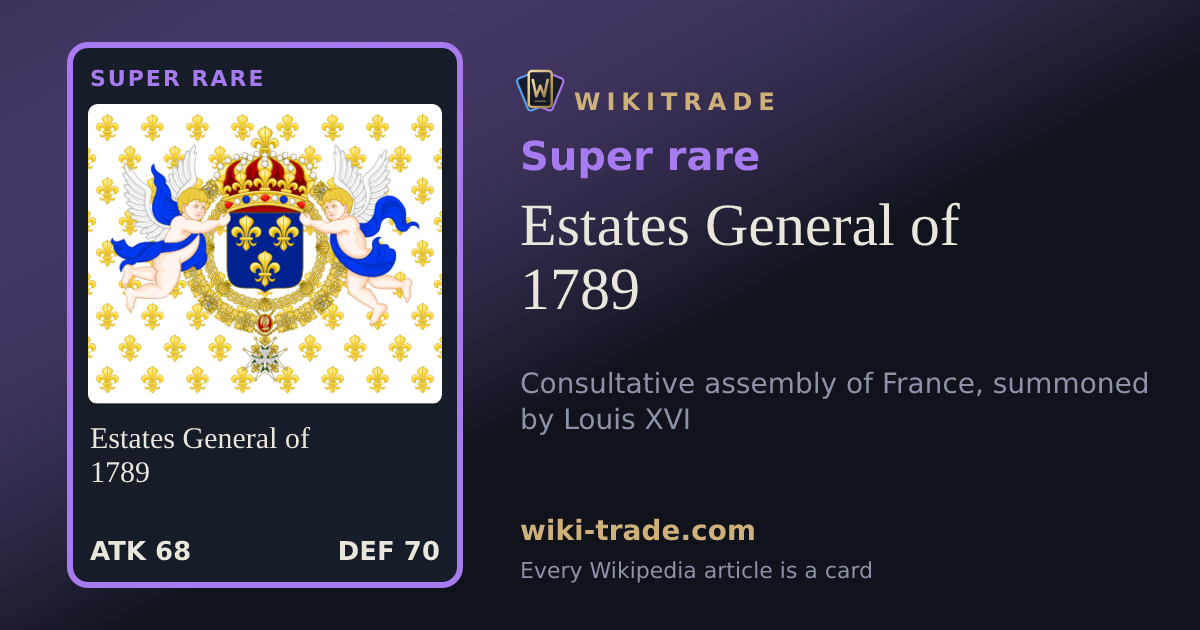
Estates General of 1789
The Estates General of 1789 was a general assembly representing the French estates of the realm: the clergy, the nobility, and the commoners. Summoned by King Louis XVI, it opened on 5 May 1789 at Versailles, marking the first such meeting since 1614. The assembly was a desperate attempt to resolve a catastrophic fiscal crisis. Previous attempts at structural reform, including a universal land tax, had been blocked by the Assembly of Notables and the Parlements. These bodies claimed that only the Estates General possessed the authority to approve new taxes. The Estates General ultimately failed due to a fundamental deadlock over voting procedures. The First and Second Estates sought to vote by estate to preserve their tax exemptions and political dominance. Conversely, the Third Estate demanded voting by head to reflect their numerical majority. This procedural dispute paralyzed the body for six weeks, preventing any progress on the financial crisis. The failure became definitive when the Third Estate broke away to declare itself the National Assembly on 17 June 1789.
On WikiTrade, every Wikipedia article is a card: the more the article is read, the rarer the card. Open free packs, complete your album, trade, bid and challenge others to general-knowledge duels.
Play for freeRead the article on WikipediaText from Wikipedia (CC BY-SA 4.0). WikiTrade is an independent site, not affiliated with Wikipedia or the Wikimedia Foundation.