 WikiTrade
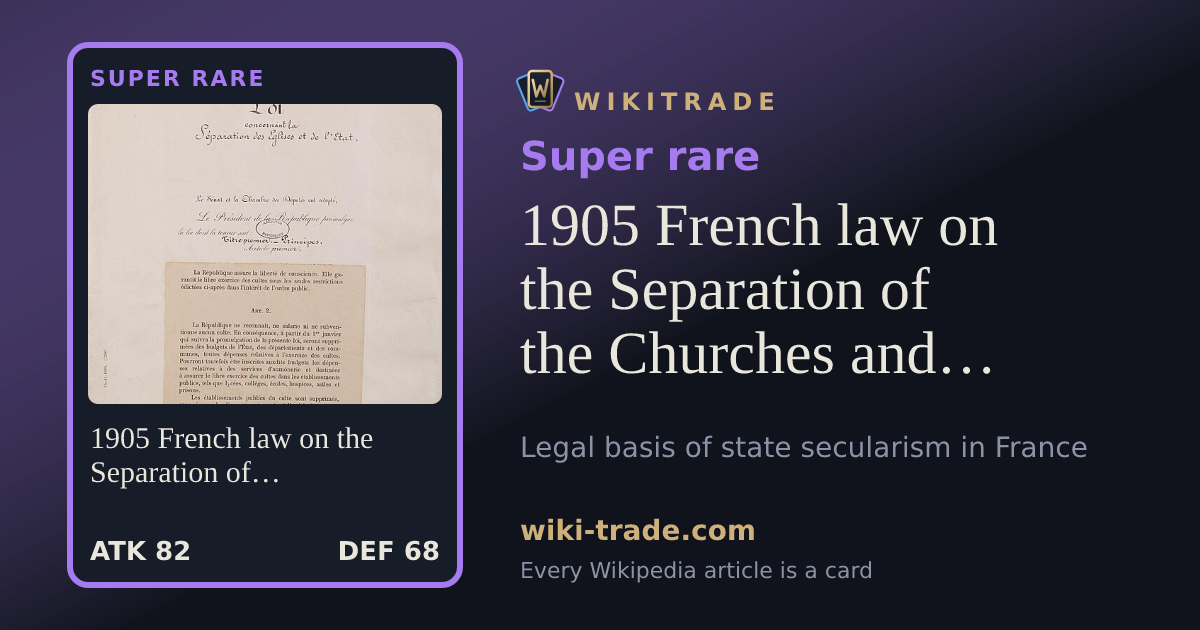
1905 French law on the Separation of the Churches and the State
The 1905 French law on the Separation of the Churches and State was passed by the Chamber of Deputies on 3 July 1905. Enacted during the Third Republic, it established state secularism in France. At the time, France was governed by the Bloc des gauches led by Émile Combes. The law was based on three principles: the neutrality of the state, the freedom of religious exercise, and public powers related to the church. This law is seen as the backbone of the French principle of laïcité (secularism). It is, however, not applicable in Alsace and Moselle, which were part of Germany when it was enacted.
On WikiTrade, every Wikipedia article is a card: the more the article is read, the rarer the card. Open free packs, complete your album, trade, bid and challenge others to general-knowledge duels.
Play for freeRead the article on WikipediaText from Wikipedia (CC BY-SA 4.0). WikiTrade is an independent site, not affiliated with Wikipedia or the Wikimedia Foundation.